
About Us
Since 1989
Tasting is believing
Cluwak was founded in 1989 with a single conviction: that the world’s rarest coffee should be wild, authentic and beautifully made. Our team travelled across Indonesia to find it, and found it in the wild forests of Sumatra. Today, our Gold Label and Black Label beans are poured in fine cafés across Europe, the United States, Japan and the Middle East.
“The smoothest and the most exquisite taste a cup of coffee can be.”
Francois Mignon, professional barista
I · Selection
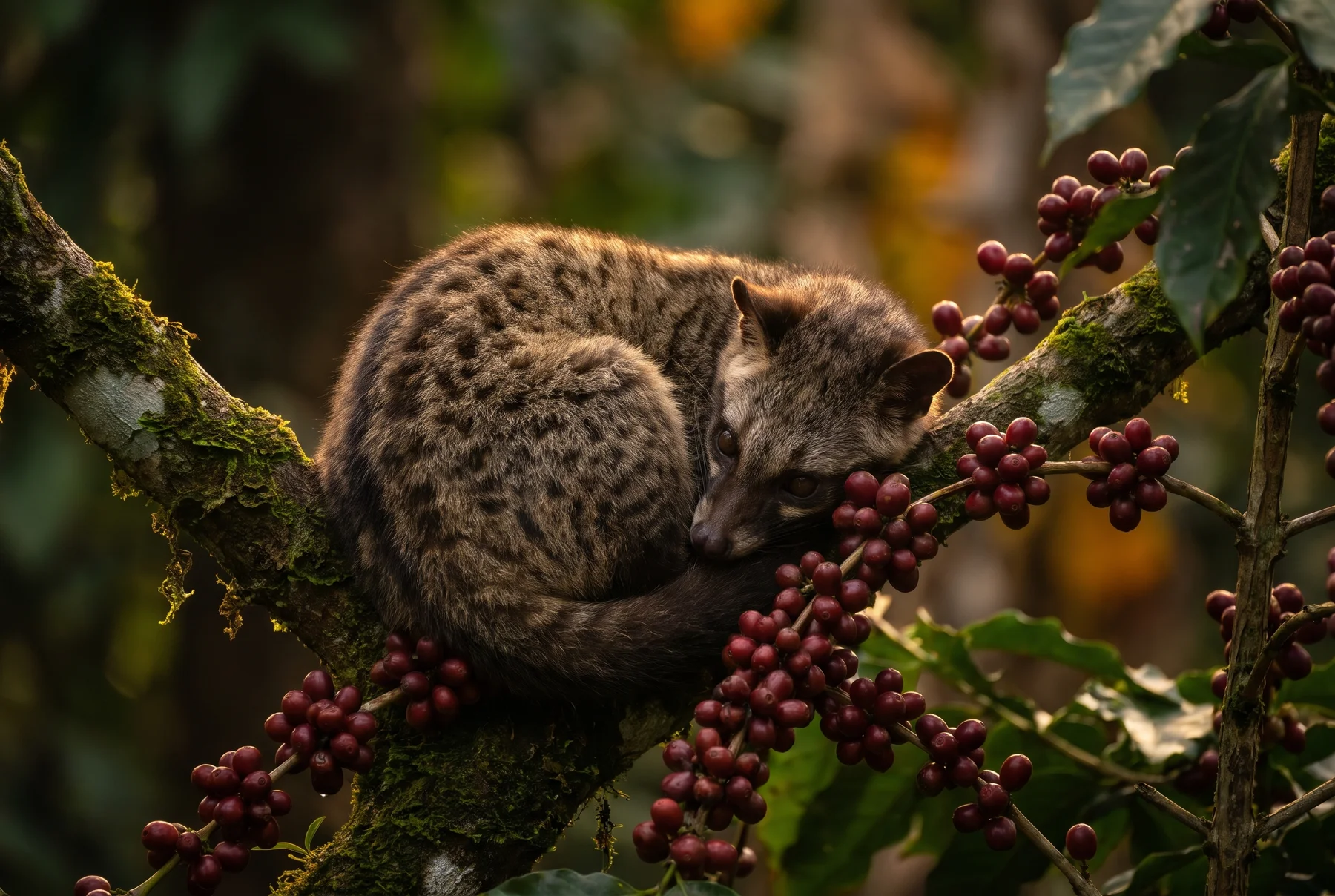
Chosen by the civet
The Asian palm civet, or luwak, roams the forests of Sumatra and is famously selective: it eats only the ripest coffee cherries. As the cherries pass through, natural enzymes and gentle fermentation transform the beans within, softening bitterness and adding a depth that no roaster can imitate.
Every Cluwak bean comes from wild, free-roaming civets. We never source from caged civets.
II · Collection
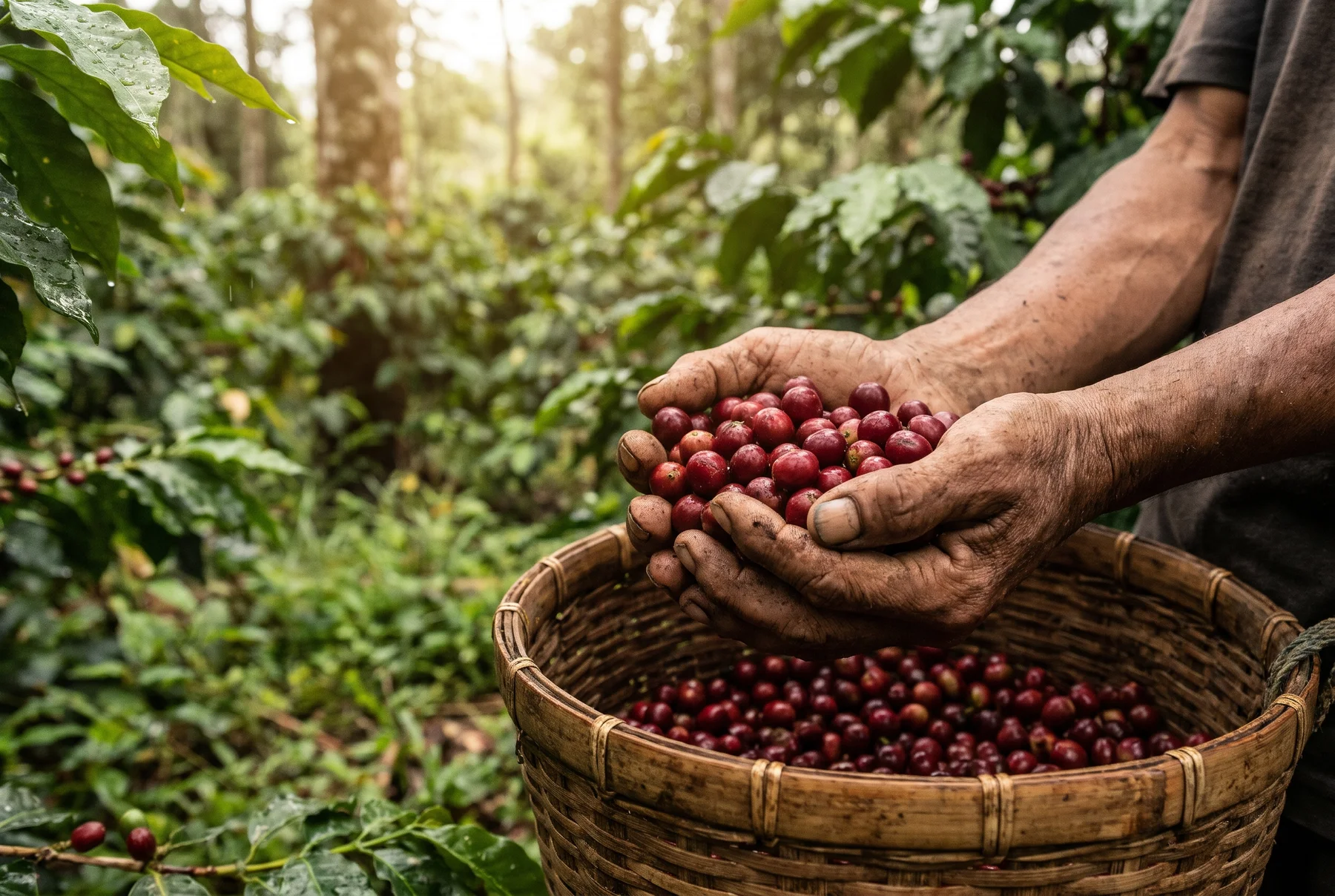
Gathered by hand
Local farmers collect the beans in the wild plantations of Bengkulu and Gayo. Each batch is thoroughly cleaned, washed in fresh water and sorted by density, so that only the soundest beans continue.
We buy directly from these traditional farmers. It is how we support the Sumatran communities that make Cluwak possible.
III · Drying
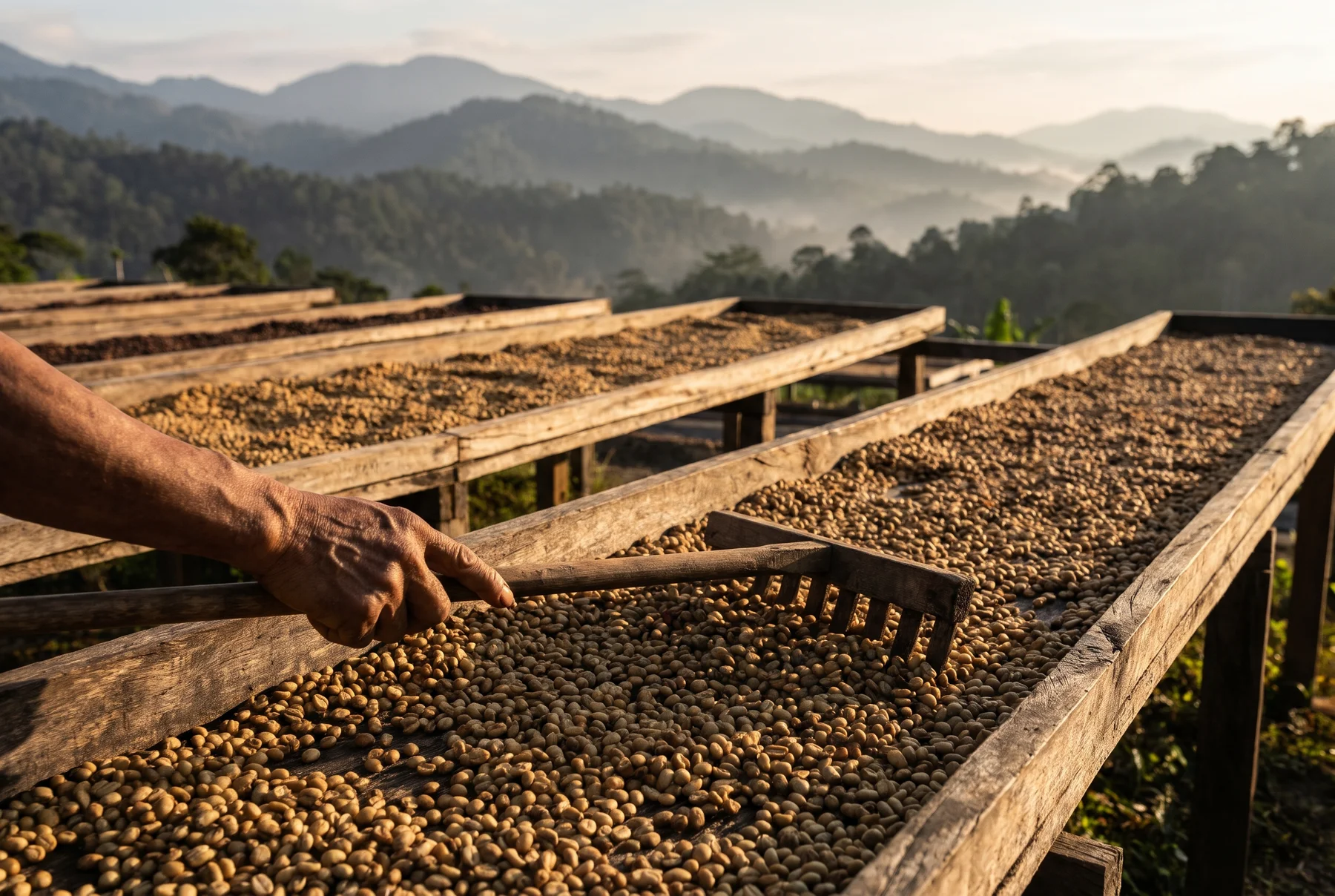
Dried in the highland sun
The beans dry slowly in natural sunlight on raised trays across open patios, turned by hand for an even result. Reaching the ideal moisture content of about 11 percent can take up to two weeks: too fast and the beans crack, too slow and they ferment.
Pressured air then removes any cracked or light beans, and experienced eyes remove the rest.
IV · Roasting
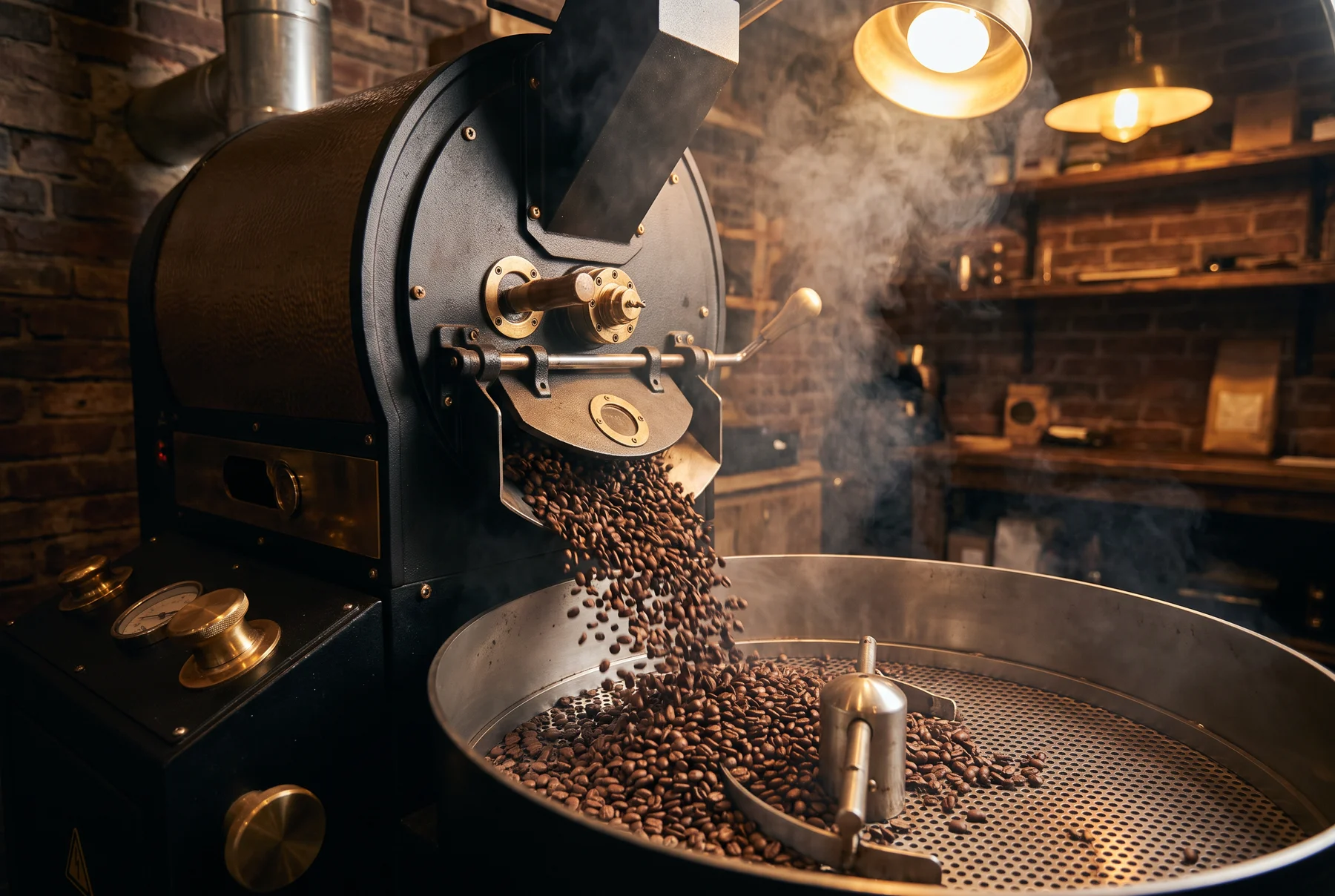
Roasted in small batches
Our phased roasting process, between 255 and 272 °C, draws out the natural oils and sugars that give each Label its character. The beans are cooled immediately to lock in their aroma.
They are then sealed in pouches with a one-way degassing valve, which lets carbon dioxide escape while keeping oxygen out.
Our promise
Why authenticity matters
As Kopi Luwak has grown in fame, so has imitation. Some producers keep civets in cages and force-feed them, which removes the natural selection that makes the coffee special. Others blend as little as 2 percent Kopi Luwak with ordinary beans.
Cluwak does neither. Our agents monitor every batch of unprocessed beans, so that every pouch contains 100 percent authentic wild Kopi Luwak.
As seen on Channel 10
Cluwak on Let’s Do Coffee
Television presenter Julia Achilleos tasted Cluwak wild Kopi Luwak on Let’s Do Coffee, the coffee series that aired on Channel 10 in Australia.
Two origins
The Labels
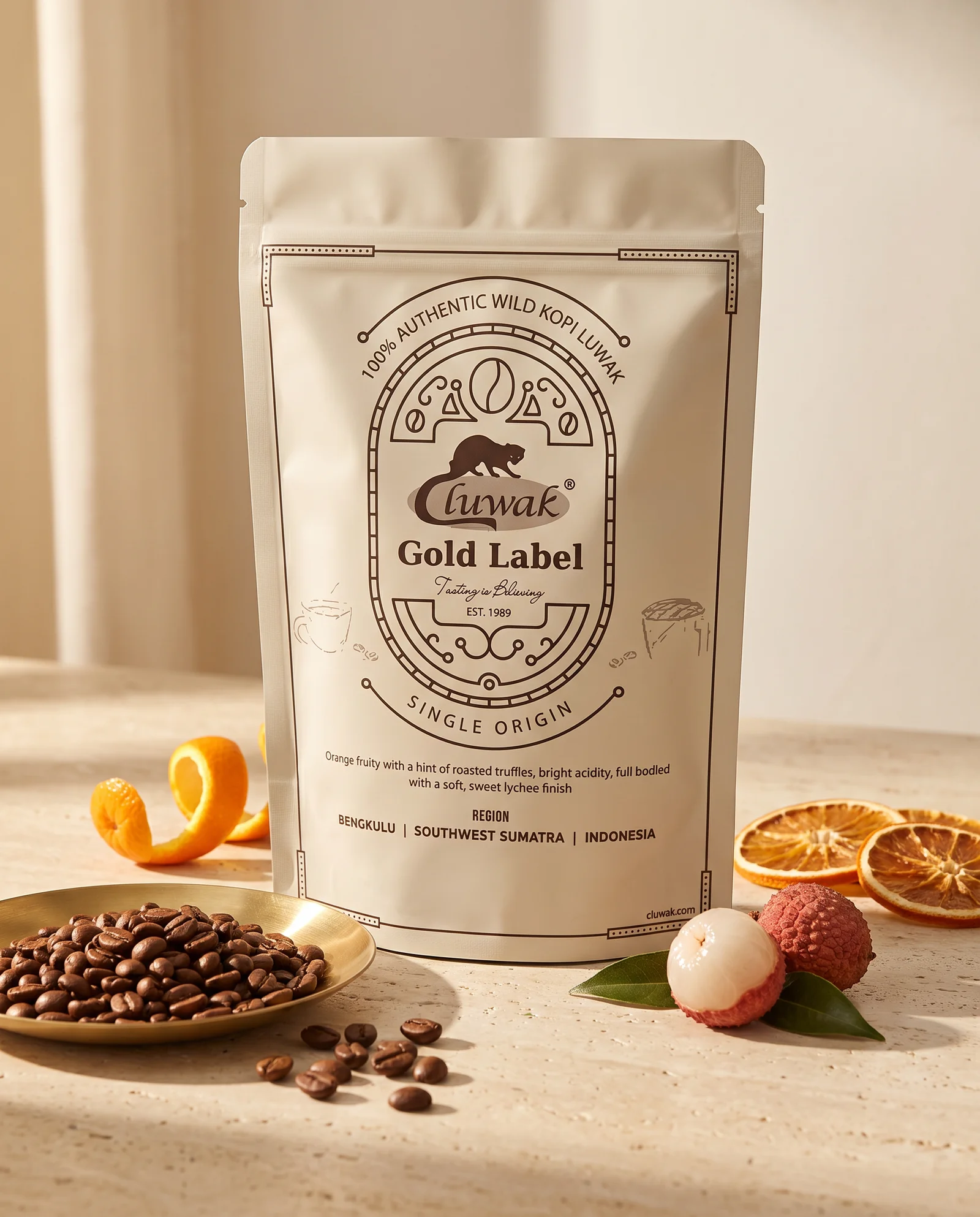
Gold Label
From Bengkulu, Southwest Sumatra. Bright and luminous, with orange, roasted truffle and a soft lychee finish.
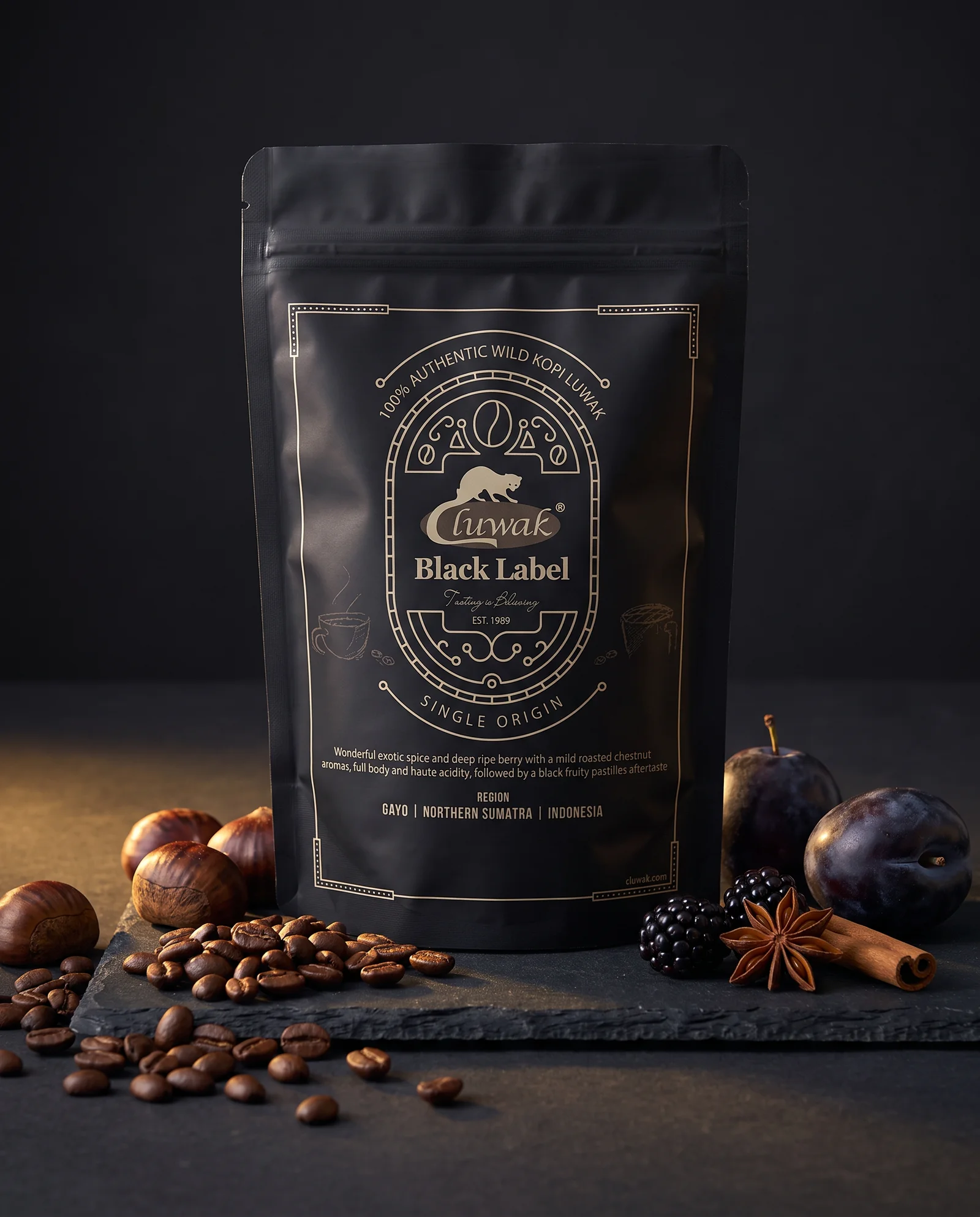
Black Label
From the Gayo highlands, Northern Sumatra. Deep and composed, with exotic spice, ripe berry and roasted chestnut.
Cluwak at a glance
| Founded | 1989 |
|---|---|
| Coffee | 100% authentic wild Kopi Luwak, Arabica |
| Origins | Bengkulu, Southwest Sumatra (Gold Label) · Gayo highlands, Northern Sumatra (Black Label) |
| Source | Wild, free-roaming Asian palm civets. Never caged. |
| Process | Hand-collected, washed, sun-dried to about 11% moisture, sorted by air and by eye, phase-roasted at 255–272 °C |
| Formats | Whole bean (100 g) · Ground (100 g) · 16 drip pouches (6 g each) · Introduction and Indulgence packs |
| Served at | Gourmet cafés in Europe, the United States and Japan, and Vogue Café in Dubai |
| Shipping | Complimentary worldwide express shipping (EMS), usually dispatched within 24 hours |
| Contact | support@cluwak.com |
Questions, answered
What is Cluwak?
Cluwak is a specialist producer of authentic wild Kopi Luwak, founded in 1989. It offers two single-origin coffees from Sumatra, Indonesia: Gold Label from Bengkulu and Black Label from the Gayo highlands, as whole beans, ground coffee and single-cup drip pouches.
Where does Cluwak Kopi Luwak come from?
From the wild forests of Sumatra, Indonesia. Gold Label comes from Bengkulu in Southwest Sumatra, and Black Label from the Gayo highlands of Northern Sumatra. The beans are collected by local traditional farmers.
Is Cluwak Kopi Luwak wild or caged?
Wild. Cluwak sources only from wild, free-roaming Asian palm civets that choose the ripest coffee cherries themselves. Cluwak never sources from caged civets.
Why is Kopi Luwak so expensive?
Authentic wild Kopi Luwak is naturally scarce, and every step, from collecting the beans in the forest to hand-sorting and phased roasting, is labour intensive. That rarity and care is why it is among the most expensive coffees in the world.
What does Cluwak Kopi Luwak taste like?
Smooth and low in bitterness. Gold Label is bright, with orange, roasted truffle and lychee. Black Label is deeper, with exotic spice, ripe berry and roasted chestnut.
Is Cluwak sometimes out of stock?
Occasionally. Supply of authentic wild Kopi Luwak is limited by nature. If a Label is unavailable, email support@cluwak.com for an estimated restock date.